
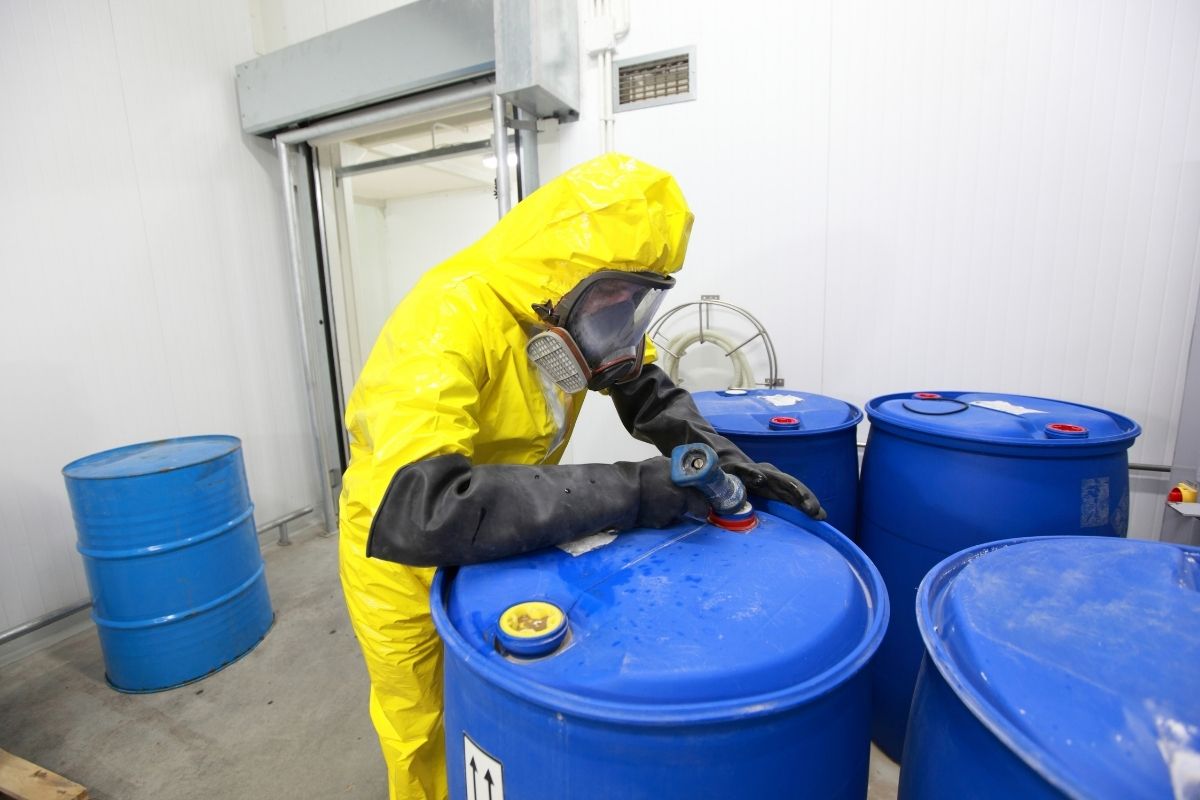
Labs, hospitals, schools, and manufacturers all tend to accumulate the same problem over time: small containers of chemicals that no one quite knows what to do with. A half-used bottle of reagent here, an outdated solvent there, and before long a storeroom is holding dozens of unlabeled or expired containers. Lab packing exists to solve exactly this problem, but doing it correctly takes more than boxing up bottles and hoping for the best.
What Lab Packing Actually Involves
Lab packing is the process of consolidating small quantities of chemical waste, ranging from as little as a few milliliters up to five-gallon containers, into larger, DOT-approved drums or pails for safe transport and disposal. Every container inside a lab pack is surrounded by absorbent material, so if one container leaks, the spill is contained rather than mixing with everything else in the drum. It’s a service used across a wide range of settings, including laboratories, hospitals, schools, semiconductor plants, and machine shops.
The Chemistry Behind the Process
Lab packing isn’t just a packaging job, it’s a chemistry job. A qualified chemist needs to identify, characterize, and segregate every chemical before it goes anywhere near a shipping container. Chemicals are grouped and packed according to their hazard class, packing group, and proper shipping name, following standards set by the Department of Transportation (DOT) and the EPA. Materials with different hazard classifications generally cannot share a container, because combining incompatible chemicals, such as an oxidizer and a flammable liquid, can create a genuine safety hazard during transport.
Why Skipping This Step Is Risky
Improperly packed or organized chemical waste creates several kinds of risk:
- Chemical reactions: Incompatible substances stored or packed together can react, generating heat, gas, or fire.
- Leaks and spills: Containers that aren’t properly organized, cushioned, and separated are more likely to leak during handling or transport.
- Regulatory violations: Hazardous waste that isn’t correctly identified, labeled, and manifested can put a facility out of compliance with RCRA and DOT regulations, opening the door to fines and penalties.
- Employee exposure: Untrained staff handling unidentified or degraded chemicals face a real risk of chemical exposure or injury.
The Lab Packing Process, Step by Step
A professional lab packing job generally follows a consistent sequence:
- Field chemists are dispatched to the facility to collect, identify, and label all waste chemicals on-site
- Chemicals are segregated by hazard class, packing group, and compatibility
- Items are packed into DOT-approved containers with absorbent cushioning material
- An inventory and packing list is created for every container
- Required paperwork, including hazardous waste manifests and Land Disposal Restriction (LDR) forms, is prepared
- Packaged waste is transported by a permitted hazardous waste hauler to an approved treatment, storage, or disposal facility
When Lab Packing Services Are Needed Most
Lab packing tends to come up in a few common situations: a lab or facility is closing or downsizing, a business is relocating and needs its chemical inventory moved safely, or a routine cleanout has uncovered old, expired, or unknown chemicals that have been sitting untouched for years. In all of these cases, an inventory that seems small can take considerably longer to sort through than expected, which is exactly why experienced chemists are worth bringing in rather than tackling it internally.
Compliance Is Not Optional
Because lab packing sits at the intersection of chemistry and federal transportation law, there isn’t much room for guesswork. Getting the hazard classifications, packing groups, and container compatibility right the first time protects employees during handling, protects the public during transport, and protects a business from the liability that comes with a mislabeled or improperly packed hazardous waste shipment.
Work With Experienced Chemists
Lab packing is one of the more technically demanding services in environmental waste management, and it’s not the place to cut corners. AEG Environmental’s team of chemists has been providing lab packing services throughout Maryland, Washington, D.C., Pennsylvania, Northern Virginia, Delaware, and the greater Baltimore area since 1995, handling everything from routine cleanouts to full facility closures. For more information about our lab packing services, please contact us today!